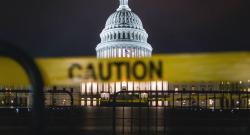
Dēmos examines ballot access issues, voter suppression in AZ, GA, OH, CA, IN, WI, MI, NC, TX, LA
Press release/statement
August 10, 2023
We are changing the conversation around our democracy and economy by telling influential new stories about our country and its people. Get our latest blog and media updates here. For more in-depth explorations and analyses, visit our Resources page.
Why the Court's decision to limit the EPA's power to regulate water access is yet another case of eroding the power of the other branches of government at the expense of Black and brown people.
Texas didn’t discriminate against minority voters. It was only because they were Democrats. And even if it did, the racial discrimination Texas engaged in is nowhere near as bad as the stuff that happened in the 1960s.
Beth Simone Noveck and Carl Malamud are pushing the IRS to publicly disclose more data on tax-exempt groups, make it more accessible in electronic form, and to do so more promptly. Count me among the effort’s biggest cheerleaders. If this push succeeds, we'll have a better handle on a key sector in
Credit cards. Mortgages. Car loans. These are the types of things that typically come to mind when thinking about your credit. But a bad credit history can do more than ruin your chances of getting a loan or landing a great interest rate -- it can cost you a job. [...]
It's no secret that sales taxes are a regressive way to raise revenues. And the heavy reliance on such taxes across the country explains why state tax systems tend to clobber the poor while asking little of the rich.
In the absence of federal leadership, states are taking the lead in the fight against climate change. Maryland Governor Martin O’Malley recently released an ambitious climate change plan that will reduce greenhouse gas emissions 25 percent by 2020, generate $1.6 billion in economic benefits, and
Once upon a time, we invested in our young people so that they could enter the world without debt. Now, we turn them into deadbeat debtors before they're old enough to legally buy a drink, left far behind their financial betters.
The United States spent around $3.6 trillion last year, on products, services, and employment, including contractors. Which companies benefited from these lucrative deals with our government? And what were our conditions on their performance? Shouldn't we, as the taxpayers that are funding these
Americans are taking advantage of greater credit availability without a heavy reliance on plastic, a trend economists say bodes well for a healthy recovery in consumer credit. The Federal Reserve reported Wednesday that consumer borrowing, excluding mortgages, surged ahead by $13.8 billion to $2.8
Critics of the fast-food worker strikes don't just make the mistake of relying on industry-backed research to argue that higher wages are unaffordable (see Jillian Kay Melchior's slanted and shallow piece in NRO) and ignore the real-live examples of U.S. states that have raised their minimun wage