Image

In our latest piece in the Economic Indicators series, we examine a key measure of the economy’s health: whether workers’ pay is keeping up with the rising cost of living.
September's jobs report came in weaker than expected. The economy added 29,000 jobs, while the unemployment rate ticked up to 4.2 percent. The report marked a shift from last month's strong report, painting a mixed picture of the labor market.
Still, jobs and topline unemployment only tell part of the story.
A strong labor market should do more than create jobs.
A strong labor market should do more than create jobs. It should mean workers are better able to meet their needs and share in economic growth. That means wages need to keep pace with the cost of living. With cost of essentials like energy and child care rising and putting additional pressure on household budgets, an important question is: Are wages keeping up with the cost of living?
Wage growth has slowed to pre-pandemic levels, while inflation remains volatile.
The answer is no: Wages are rising, but workers aren't necessarily getting ahead. Wage growth has slowed to pre-pandemic levels, while inflation remains volatile.
Prices are outpacing wages. As the chart below shows, hourly earnings grew just 3 percent from a year ago, continuing the recent slowdown. The latest available Consumer Price Index (CPI) data, from August, show prices rising by 3.4 percent over the year. Through August, prices had outpaced earnings for five consecutive months. We will get a fuller picture of how wages are keeping up with prices when September CPI data are released on October 14th.
When prices rise as quickly as, or faster than, wages, workers can earn more dollars without being able to buy more with those dollars. A raise in wages is not a raise in living standards when the cost of housing, food, utilities, child care, and other necessities outpaces it.
A "strong economy" should do more than help workers keep up with rising costs. It should give workers the ability to improve their living standards and share in the gains of economic growth.
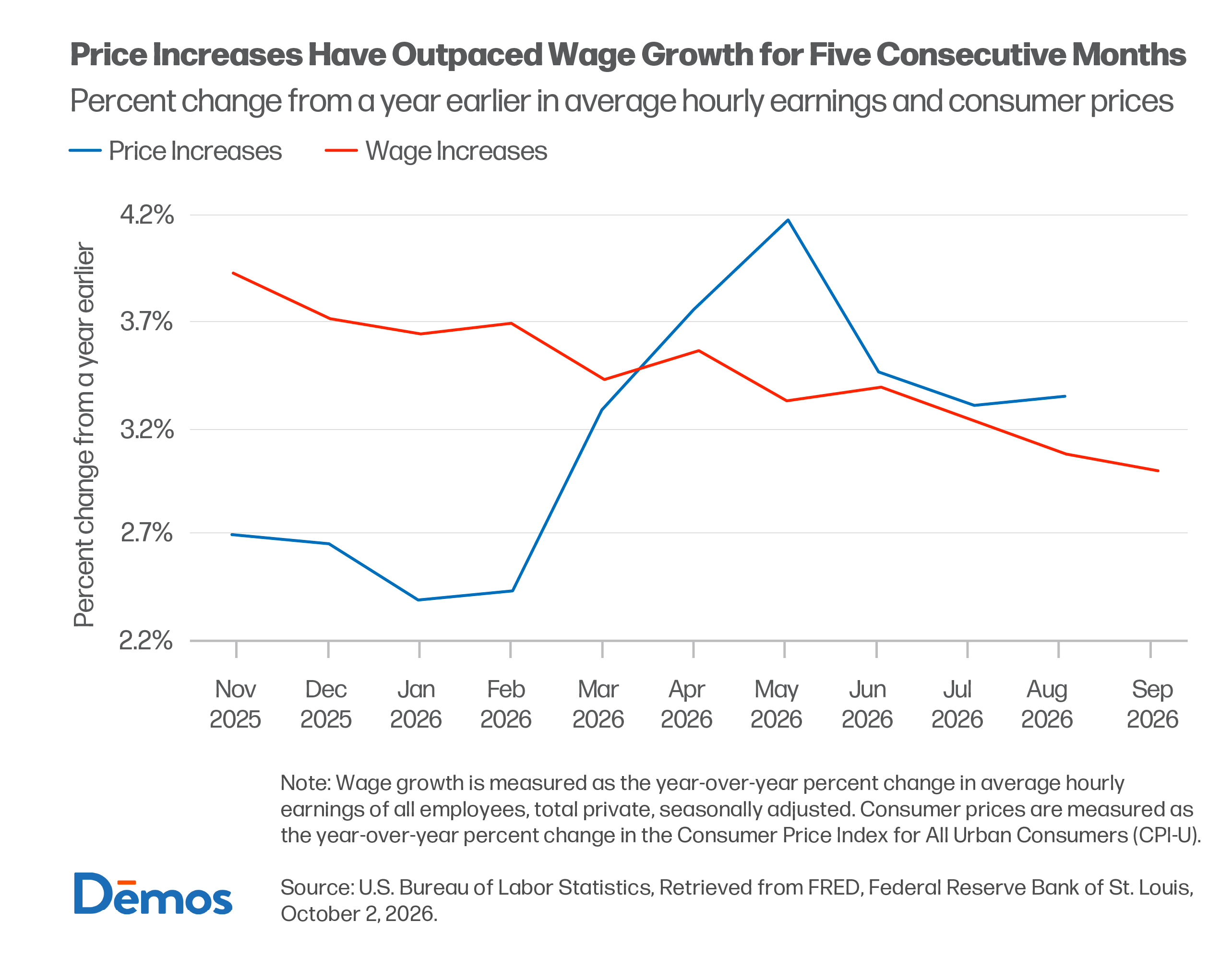
Making ends meet depends on more than whether a worker's paycheck is growing. It depends on whether that paycheck can keep up with rising costs, and right now wages are not keeping pace.
Rising prices impact everyone, but lower-income households bear the brunt. They spend a larger share of their income on essentials like housing, groceries, and transportation, so increases in the cost of those necessities have a bigger impact on their budgets. And over the past two decades, the cost of essentials has grown faster than income among lower-income households. Between 2004 and 2024, median incomes among lower-income households grew by 5.5 percent, while their spending on essentials increased by 14.5 percent. Moreover, Black and Latino households are more likely to face the greater budget pressures that come with rising costs for everyday essentials as they are disproportionately represented among lower-income households, reflecting persistent racial disparities in income and economic mobility.
So even when average wages are rising, workers aren’t necessarily better able to afford their lives. If we want to know whether the economy is working for people, we need to look beyond the topline numbers and ask whether people are actually able to make ends meet.
A genuinely strong economy doesn’t just create jobs. It makes it possible for workers to afford their lives and share in the gains of economic growth. Those gains should reach workers who have historically been left furthest behind.