Image

A strong labor market doesn’t leave workers behind. This analysis examines why long-term unemployment is a critical measure of labor market health and how it deepens economic inequality over time.
Today, roughly 1 in 4 unemployed workers have been searching for a job for over six months
April's jobs report beat expectations, with job growth outpacing forecasts and unemployment holding steady at 4.3 percent. But beneath those strong headline numbers, long-term unemployment remains stubbornly high. Today, roughly 1 in 4 unemployed workers have been searching for a job for over six months, a reality disproportionately experienced by Black workers. To understand what's really happening in the labor market, we need to look not just at how many people are unemployed but how long they stay unemployed.
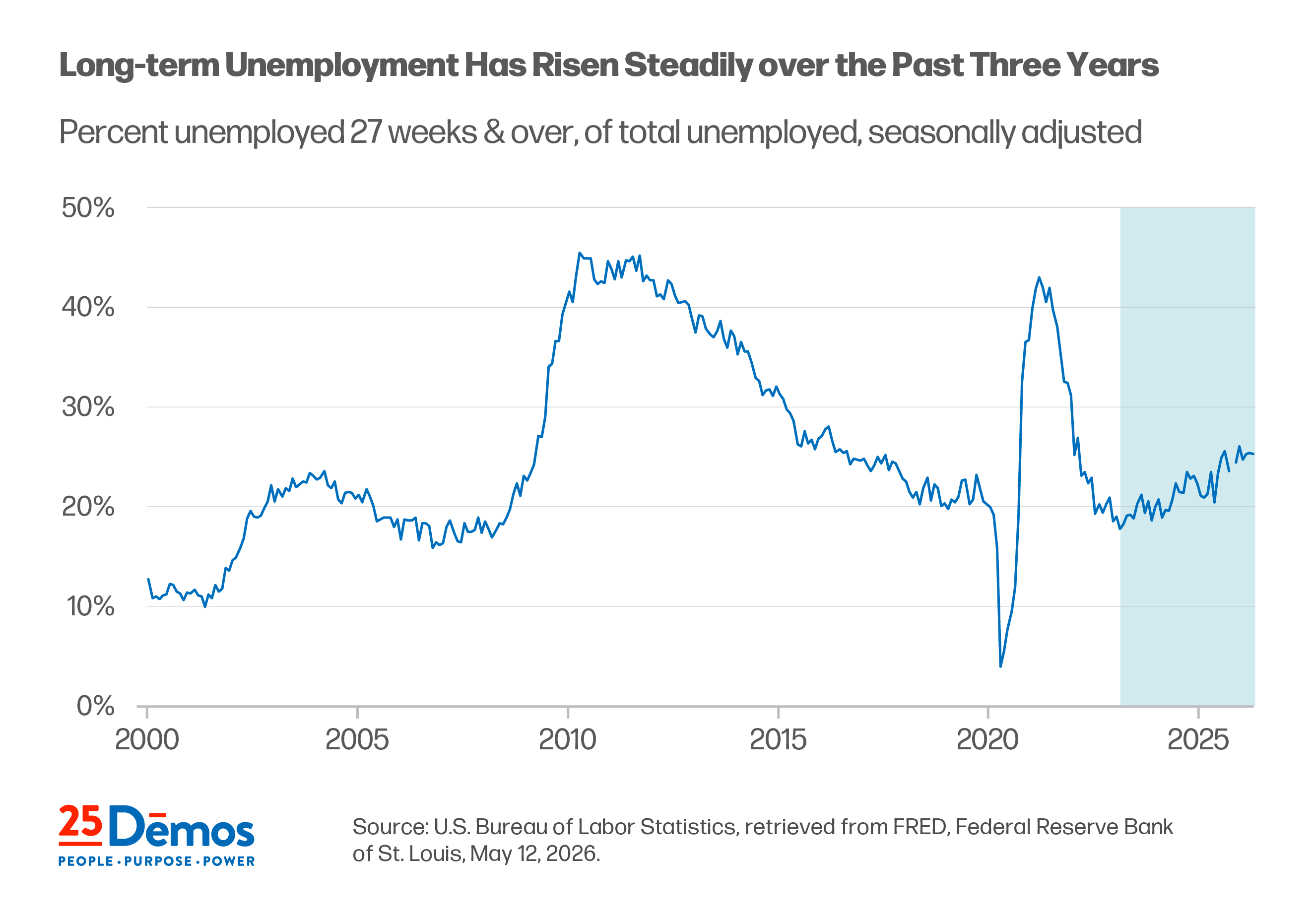
Long-term unemployment, defined as unemployment lasting for 27 weeks or longer, offers a clearer picture of labor market challenges that headline unemployment rates alone can't capture. When large numbers of workers are unemployed for long periods, it can signal that the labor market is not creating enough accessible opportunities for people seeking work. The graph below shows the share of unemployed workers who have been searching for a job for more than six months. While long-term unemployment remains below recession-level highs, it has risen steadily over the past three years. The latest data available shows that 25.3 percent of unemployed workers in April 2026 fell into this category
Black workers tend to experience both higher rates of unemployment and longer spells of unemployment than white workers
Because of longstanding inequities in job access, job stability, and hiring practices, Black workers tend to experience both higher rates of unemployment and longer spells of unemployment than white workers. In 2025, on average, Black workers were unemployed for over a month longer than white workers, at 27 weeks relative to 21.9 weeks for white workers. Black workers are more likely to be concentrated in lower-wage and less stable jobs, making them more vulnerable to layoffs. At the same time, research shows they continue to face discrimination in hiring even when controlling for education and experience, which can make it harder to find new employment after losing a job. As a result, even when headline indicators such as job growth or topline unemployment improve, disparities in unemployment duration can persist.
Long-term unemployment has serious consequences for workers, families, and the broader economy. Today, 1.8 million people in the U.S. have been searching for a job for more than six months. In many states, benefits expire before workers reach the six-month threshold, and even when benefits are available, they often replace only a fraction of prior wages if workers are able to claim them at all. This creates immediate financial strain and weakens economic stability, making it harder for families to keep up with groceries, rent, utilities, childcare, and other basic expenses. Long stretches of unemployment can also make it more difficult for workers to find employment again. Research shows that the longer someone remains unemployed, the less likely they are to be rehired. These challenges extend beyond individual workers and families. When large numbers of people are out of work long for periods, it can reduce consumer spending and slow economic growth.
Long-term unemployment is both a sign that the labor market is leaving some workers behind and a force that deepens inequality over time. Because Black workers already face longer average durations of unemployment, the lingering effects of prolonged joblessness—lower chances of being rehired, reduced earnings, prolonged financial instability—can compound existing disparities in income, savings, and wealth. In this way, long-term unemployment does not just reflect inequities in the labor market, but it can also widen those inequities over time.
Headline indicators alone are not enough to assess the health of the labor market. If large shares of workers are locked out of employment for extended periods of time, the economy is not as strong as it appears. And because Black workers already tend to face longer durations of unemployment, these disparities can deepen existing inequities over time. The real measure of a labor market's health is not the headline unemployment rate but whether the people most often left behind are able to find stable work and build economic security.