Sort by
Today President Obama fulfilled his constitutional duty by nominating Judge Merrick Garland to succeed Justice Antonin Scalia on the U.S. Supreme Court. Now the question is whether U.S. Senators will do their jobs.
Blog
Adam Lioz
The U.S. Supreme Court has become friendly turf for the powerful.
Blog
Adam Lioz
The campaign money chase makes the sliver of Americans who donate large sums the most important citizens.
In the media
Heather C. McGhee
In a recent report, Demos and the Public Interest Research Group showed how many viable candidates, including many candidates of color, struggle to compete against better-funded incumbents.
In the media
Sean McElwee
Political science literature shows: money influences political outcomes and tilts policy in favor of an overwhelmingly white and male donor class.
Blog
Sean McElwee

Lisa J. Danetz

Image
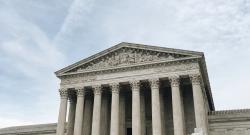
The Supreme Court of the United States from a distance
Buckley has been called the “original sin” of campaign finance law.
Blog
Allie Boldt
The idea of a property-owning democracy has long roots in American political thought. In their book, The Citizen's Share, Joseph R. Blasi, Richard B. Freeman and Douglas Kruse argue that the Founding Fathers wanted everyone (well, everyone who was white and male) to own a small slice of property
In the media
Sean McElwee
When Bartels compared the policy preferences of the rich and poor to actual policy results (with controls) his results were disturbing. He finds that low-income preferences had virtually no effect on policy outcomes.
In the media
Sean McElwee
The 2016 presidential election will be the second since the court's disastrous Citizens United decision and the first without the full protections of the Voting Rights Act in place. That means big donors will have more sway over elected officials to dictate the agenda.
In the media
Sean McElwee